
Legal
Build a Clause Library Before You Need It
Without one, every contract is drafted from the last similar contract — which was itself drafted from the one before, carrying forward a concession nobody remembers making.
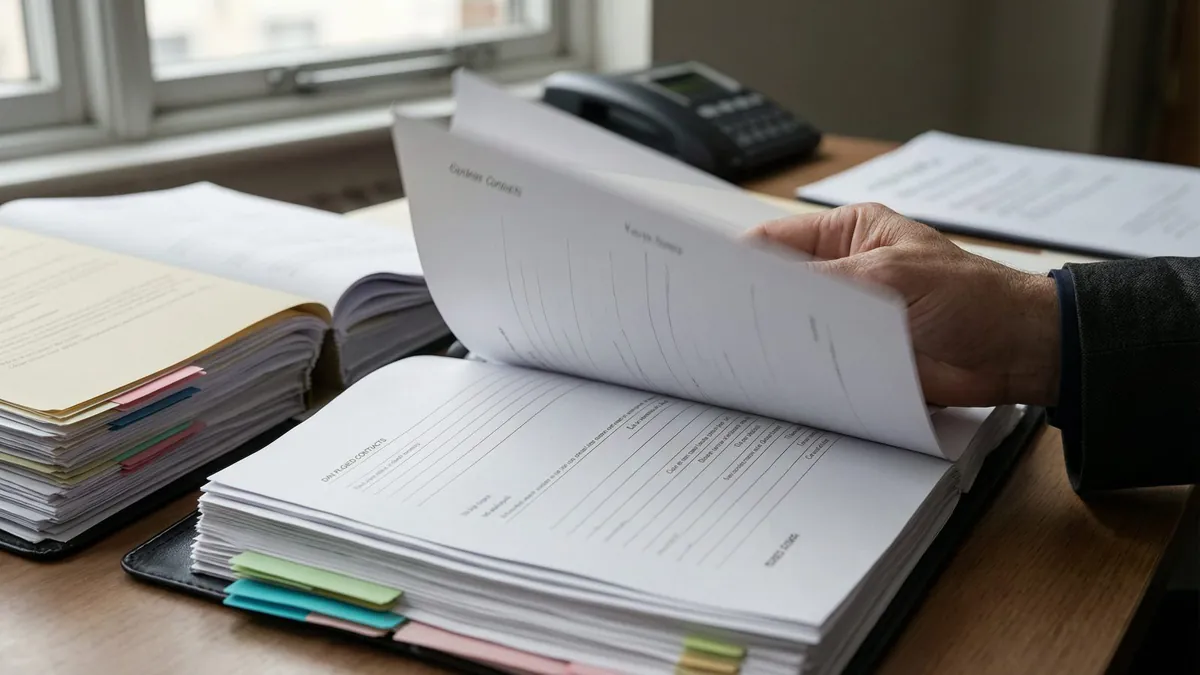
The default drafting method in most organisations is precedent by proximity: find the most recent agreement that looks similar, copy it, change the names. It is fast and it accumulates error. A concession granted once to close a deal propagates silently into every contract that descends from it.
What a clause library is
A maintained set of approved clauses, each with a preferred position, one or two pre-approved fallbacks, and a note on what is not acceptable. The point is not to eliminate negotiation but to make the negotiating range a decision the organisation made in advance, rather than one made under time pressure at 6pm.
• Preferred — what we ask for first.
• Fallback — pre-approved, no escalation needed.
• Escalation — acceptable only with a named approver.
• Never — the position we will lose the deal over, and why.
The 'why' column is what keeps the library alive. A rule with a stated reason can be reconsidered when the reason changes; a rule without one becomes folklore and is either obeyed pointlessly or ignored entirely.
Every clause in the library needs a reason attached, or it will be treated as a preference.
Start where the friction is
Do not attempt the whole contract. Build the library for the six or seven clauses that consume most of the negotiation time — typically liability caps, indemnities, termination, IP ownership, data protection, payment terms and governing law. Those are where the risk and the delay both concentrate.
Let the commercial team self-serve
The real return arrives when a salesperson can answer a counterparty's redline without opening a ticket, because the fallback is pre-approved and they can see it. Legal's involvement then concentrates on genuine escalations. This requires the library to be written in language a non-lawyer can act on, which is a harder drafting exercise than writing it for lawyers.
Record what actually gets agreed
Track which position was accepted in each executed contract. After thirty deals you have data: a fallback conceded almost every time should probably become the preferred position, since asking for the stronger one is costing negotiation cycles and winning nothing. This is the feedback loop that separates a library from a style guide.
Review on a schedule and after every dispute
Legislation moves, case law clarifies, and a dispute teaches you which of your clauses was ambiguous under pressure. An annual review plus a mandatory post-dispute review keeps the library current. A library last updated three years ago is worse than none, because people trust it.
Positions in a clause library are commercial and jurisdictional judgements. Have the library reviewed by counsel qualified where your contracts are governed before it becomes the default.
Tracking which position actually gets agreed changed two of our 'preferred' clauses into fallbacks. We were spending negotiation cycles asking for something we conceded 90% of the time anyway.
The 'why' column is what stops the library becoming folklore. Ours had a hard limit nobody could explain, traced back to a single deal in 2019 that went badly for unrelated reasons.
Writing the fallbacks for non-lawyers is much harder than it sounds but it's where the return is. If I can answer a redline without raising a ticket, the deal closes days earlier.